
Edited by: Anjella Kang Lee | Graphic by: Hayden Shin
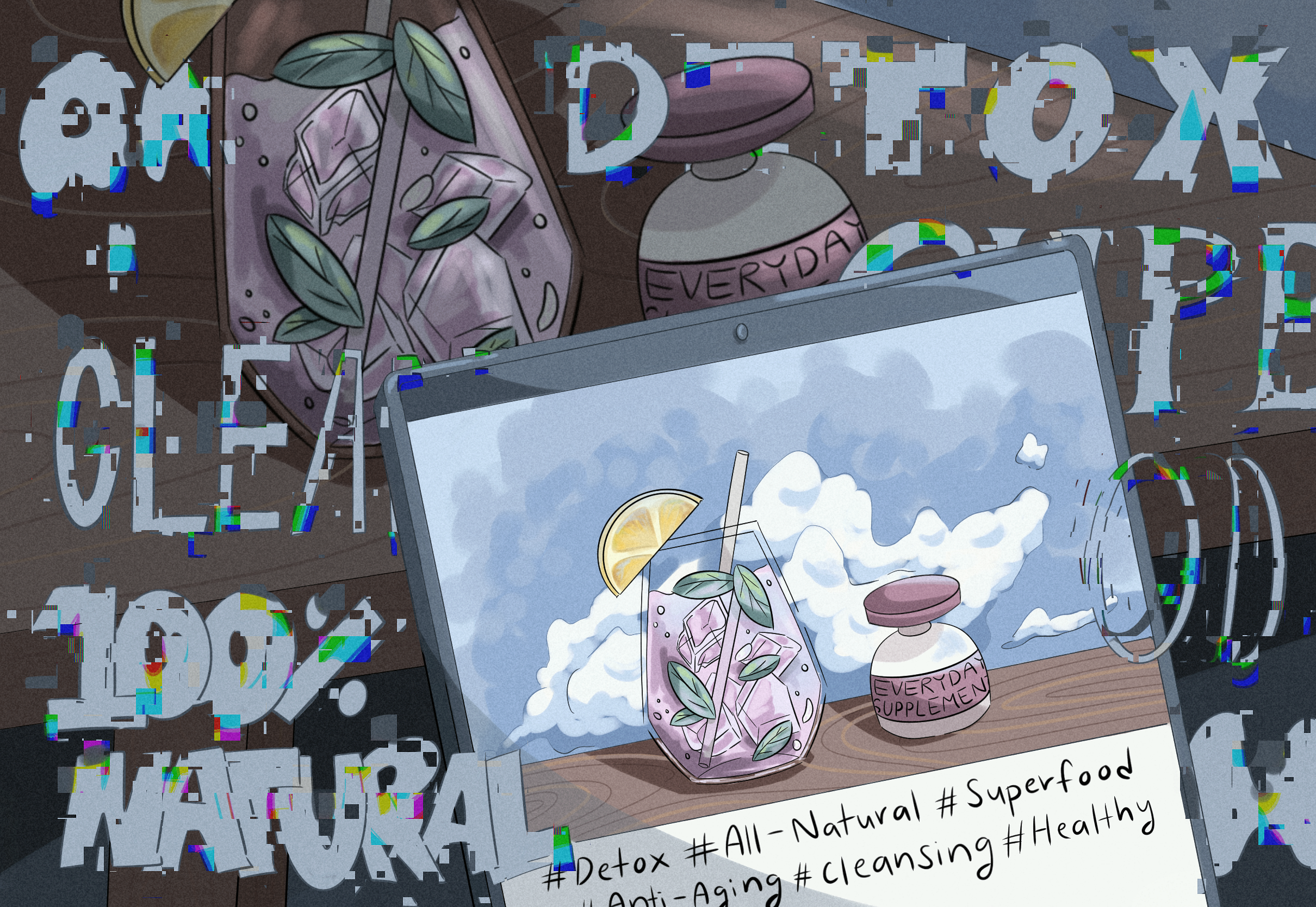
How supplements have become wellness culture’s favorite microtrend.
Miracles are not sold in bottles. However, the booming supplement industry has convinced us otherwise. Yet another microtrend, supplement-maxxing, has become a central part of influencer wellness routines, and while it may look visually pleasing online, most have marginal benefits on one’s health. Audiences are fed buzzword-laden false promises of deep cellular hydration, full-body detoxification, and improved immune function in just a couple of capsules.
These quick fixes may sound appealing, but their claims lack merit and present unrealistic solutions to complex health challenges. Following the COVID-19 pandemic, individuals reported higher rates of psychological distress regarding their health. This fear has led individuals to overestimate how many precautions are needed in order to remain healthy and prevent future complications. Hence, supplements have become a popular option for those looking to reinforce their immune system, increase their nutritional intake, and support their longevity. Supplement manufacturers have profited off of post-pandemic health concerns, marketing appealing magic bullets to uninformed consumers. These companies often create solutions to non-existent problems, using clever taglines, social media marketing, and celebrity endorsements to promote their products.
While dietary supplements are not inherently harmful, the problem lies in how wellness culture casually promotes their overconsumption. Electrolytes, green powders, most multivitamins, and collagen peptides are widely advertised, but there is minimal evidence corroborating their effectiveness. Prioritizing a balanced diet and practicing healthy habits on an individual level are far more effective than taking supplements to remedy absent nutritional deficiencies. Supplements are also not approved as medical treatments, instead functioning as placebo band-aids for underlying health concerns, like using melatonin for chronic insomnia. However, they are a necessary intervention in specific cases. During pregnancy, for example, individuals are urged to take prenatal vitamins rich in folic acid and omega-3 fatty acids, which are essential nutrients for healthy fetal development. Hence, supplements remain beneficial in filling nutritional gaps for those who are unable to meet their health needs through diet alone.
Supplements may be “natural,” but they are unregulated by the Food and Drug Administration and other federal agencies, so their safety and efficacy cannot be accurately evaluated. In fact, they have been shown to have adverse health effects if consumed in excess. Electrolytes, especially in the form of powder packets, have become a staple in the wellness community, as they provide more hydration than water. However, most of these powdered electrolytes are sodium-based and are only beneficial after intense exercise, prolonged heat exposure, considerable sweating, or dehydration from excessive alcohol consumption, vomiting, or diarrhea. Considering that most Americans are consuming over 3,400 milligrams (mg) of sodium each day, which is 1,000 mg above the federally recommended limit, popular electrolyte supplement brands like LMNT, which contain upwards of 1,000 mg of sodium per packet, can precipitate grave health issues.
Kidney failure and heart disease are among the leading consequences of excessive sodium consumption, so it is important to always consider the frequency and dose of daily supplements to prevent avoidable complications. A surplus of any good thing nullifies and even reverses its benefits, and fat-soluble vitamins such as A, D, E, and K are no exception. Excess water-soluble nutrients can be simply excreted with urine, but fat-soluble vitamins can accumulate in toxic levels in the body and may cause hypervitaminosis, a result of too many stored vitamins in the liver or adipose (fat) tissue. Consuming foods rich in these vitamins can further elevate this toxicity, demonstrating the grave consequences of supplement overconsumption.
There has yet to be a way to safely and effectively “biohack” health, and there may never be. The journey to health is deeply personal; not one that can be solved in the oversimplified framework that is often pushed by the wellness industry.
*It may be valuable to consult a trusted medical professional and receive blood testing, if able, to identify any nutritional gaps before incorporating dietary supplements.