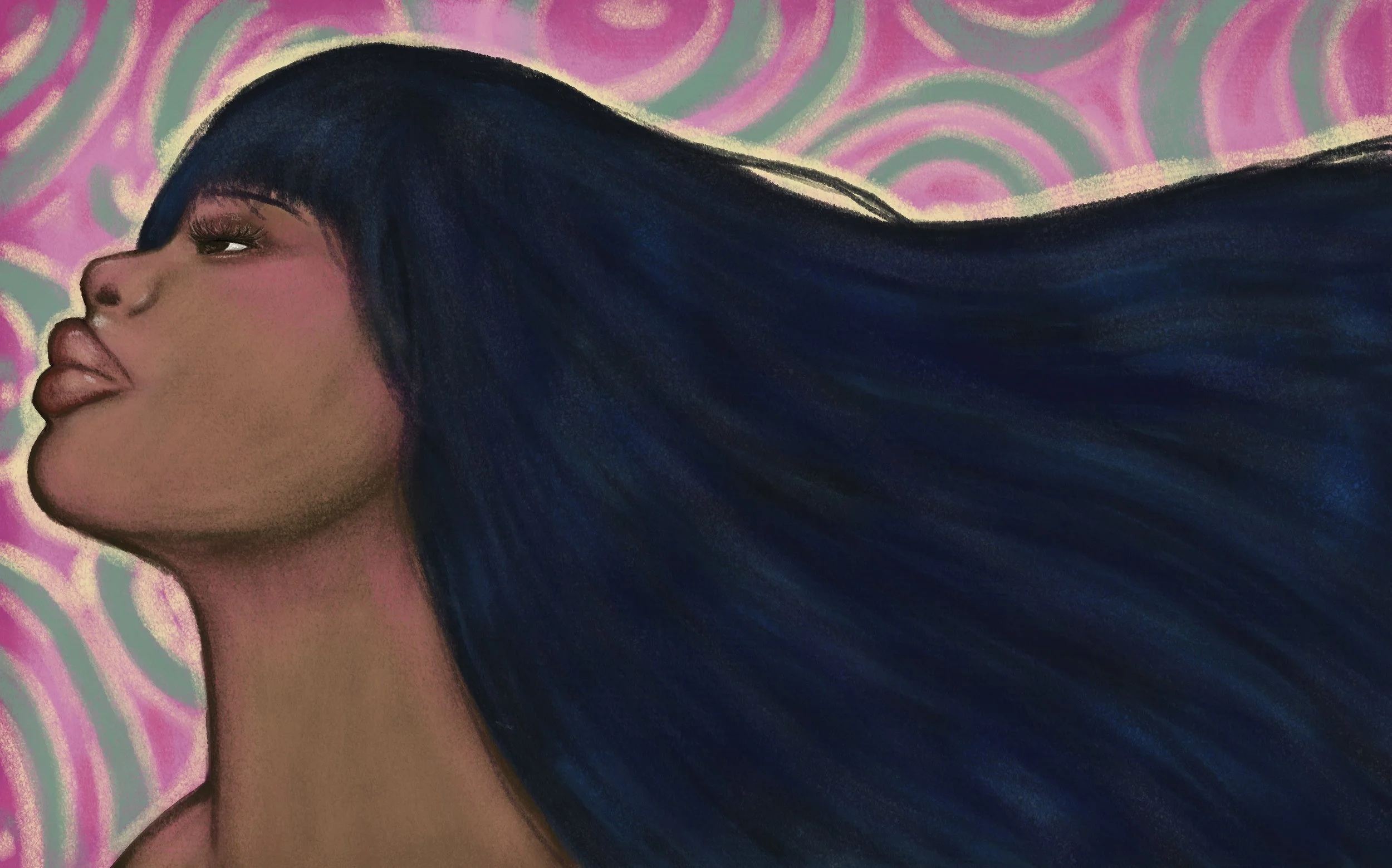
Edited by: Lara Sadi | Graphic by: Mellanie Mack
What does our hair tell us about our health?
The condition of our hair affects our physical appearance, but does it also reflect our internal health? This article will explore the different signals hair can send that tell us about our bodily health.
When you look into the mirror, it is easy to brush off changes in your hair’s appearance as an annoying cosmetic issue. However, clinical research shows that shifts in texture and hair loss can reveal more about our health than meets the eye. Since hair growth relies heavily on our internal health, differences in hair condition often signal a problem within our bodies.
In order to understand why these changes occur, it is important to look at how hair grows. Surprisingly, human hair grows at a rate of roughly 0.35 millimeters each day, meaning a daily shed of about 100 strands is completely normal. Every hair strand moves through stages of growth, transition, and rest before it falls out. Hair follicles are among the body’s most energy-consuming tissues, so they require a steady supply of nutrients to produce strong strands. Sudden disruptions in hair structure or growth may therefore reflect changes in follicle metabolism.
Since hair growth relies on these metabolic processes, physical and emotional stress play a significant role in sudden hair changes. Stress can trigger chemical signals around hair follicles that cause inflammation and push actively growing hairs into the resting phase. This shift leads to noticeable hair loss a few months after the stressful event occurs. In addition to altering growth cycles, stress-related chemical signals can affect the energy-producing structures within hair and pigment cells, potentially weakening hair shafts or contributing to localized pigment loss. Stress signals released by the nerve endings around hair roots can cause local inflammation, forcing the follicle to shut down its growth phase early.
Hormonal balance also directly controls how well your hair grows. Thyroid hormone levels affect hair health because both hypothyroidism and hyperthyroidism can disrupt regular growth cycles and contribute to changes in hair texture or shedding.Specifically, thyroid hormones directly regulate mitochondrial energy production within hair roots, meaning an underactive thyroid can prolong hair shedding, while an overactive thyroid weakens individual hair follicles and reduces their overall strength.
Nutrition provides another essential foundation for maintaining strong, resilient hair. Sudden weight loss or low-protein diets can trigger acute hair shedding. Essential minerals like iron and zinc support follicle structure and maintain natural hair pigmentation. Specifically, iron helps hair root cells divide and grow, while zinc supports the proteins and enzymes needed to build hair. Deficiencies in nutrients such as niacin, or vitamin B3, and vitamin D may also contribute to hair thinning or disruptions in the normal growth cycle. However, taking extra dietary supplements without confirming an actual nutrient deficiency can cause imbalances or even worsen hair shedding, as taking too much vitamin A, vitamin E, or selenium can actually lead to hair toxicity and trigger rapid hair loss.
Whether influenced by stress, hormones, nutrition, genetics, or hair-care practices, healthy hair depends on many factors. A look into your hair might reveal important information about your internal health. Persistent or sudden changes in your hair may be worth discussing with a healthcare professional, especially when they occur alongside other symptoms.