
Déjà vu: Think You've Been in This Place Before?
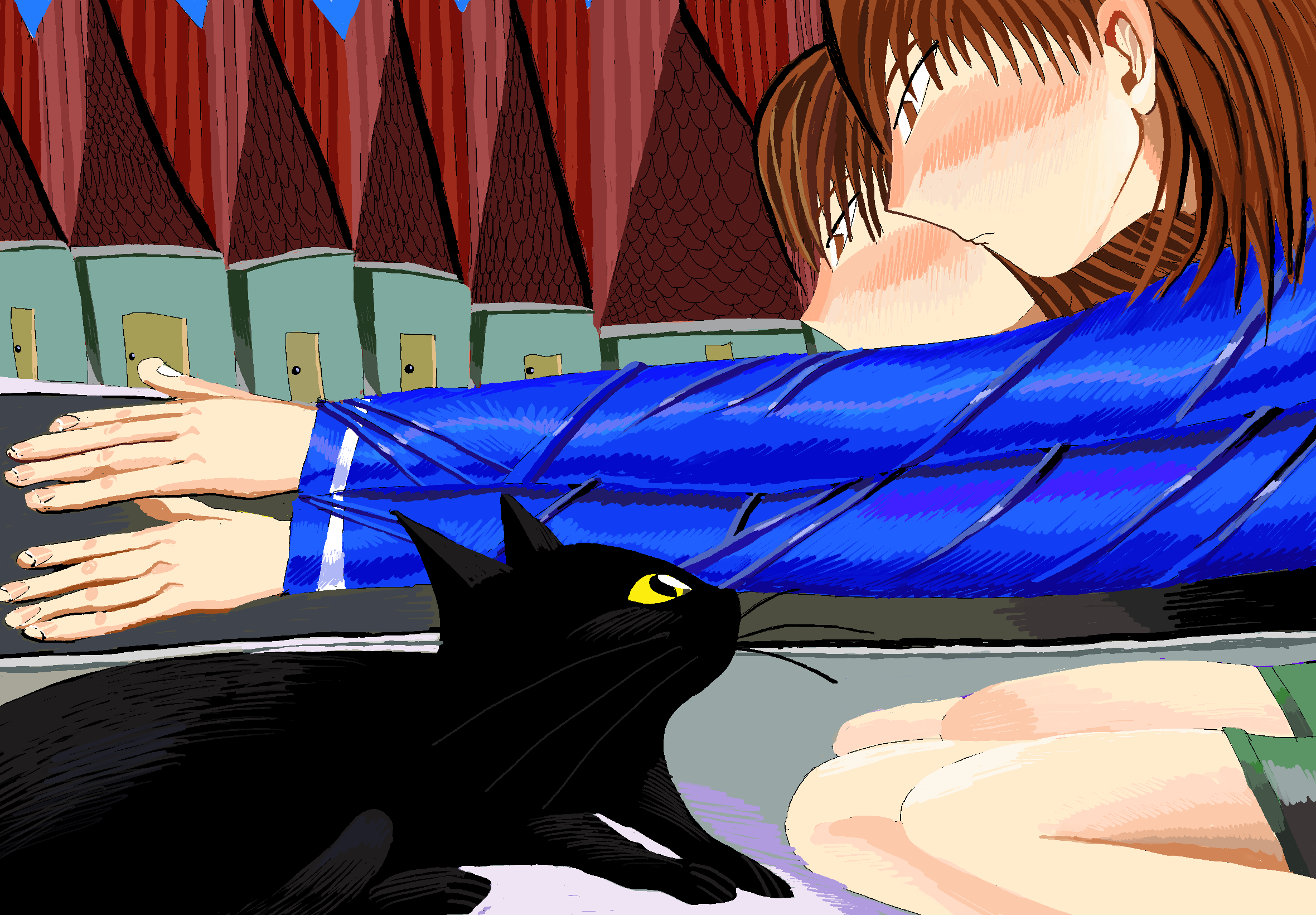
Graphic by Izzy Ringman Flores
Ever walked into, say, your friend’s house for the first time, and noticed that the layout stirred a sense of familiarity within you, despite your acknowledgment that the memory you’re experiencing never existed in the first place? Around 60-90% of the world’s population has experienced this phenomenon known as “déjà vu,” a term coined in 1876 by French philosopher Émile Boirac.
Essentially the French phrase for “already seen,” déjà vu describes the event of feeling a scene to be familiar despite recognizing it as foreign or new. Due to its brief and sporadic nature, scientists struggle with quantifying this occurrence. However it is accepted that there are some neurological causes for this effect that, while varied, could provide some explanation.
It is interesting to first note the bulk of the population that experiences déjà vu exhibit one of the following characteristics: high level of education, frequent travelers, young in age, or those who remember their dreams well. Scientists have theorized that such correlations are due to déjà vu being potentially triggered by high levels of “excitatory activity,” as stated by the blog InspireTheMind. In line with this theory is the hypothesis that déjà vu is a misfiring or, in Theodora Blanchfield’s words from VeryWellMind, “abnormal signaling within the medial temporal lobe, which governs memory processing, particularly visual memories.” While in the average person this causes déjà vu, it can progress into a condition known as “temporal lobe epilepsy,” in those who suffer from it. This occurs when abnormal signaling spreads throughout the brain instead of stopping before triggering a larger neurological event. Notably, according to Julia C. Teale and Akira R. O’Connor from Frontiers for Young Minds, patients “often report having déjà vu just before they have a seizure,” telling us “that déjà vu is probably linked to the temporal lobe of the brain.”
Other theories do not delve into miscommunication between the brain cells, but rather into information processing leading up to the event. It is widely known that humans, even when distracted, can still retain “environmental information” at a subconscious level. However, this process is not always actively catalogued, leading to the illusion that a situation has been experienced before, once the person consciously notices what they had already subconsciously understood. Another example involves the idea that “two cognitive processes which are usually in sync become briefly asynchronous,” resulting in a delay when receiving both forms of information and the subsequent interpretation of the two inputs as separate events.
Another theory suggests that déjà vu stems from an issue of “how the hippocampus interacts with its surroundings,” creating a “false memory that we experience as déjà vu,” according to Dr. Khoury from Cleveland Clinic. He said that this is an incoherence between the recognition and memory systems, similar to the misfirings mentioned previously, but without the aforementioned health emergency, it is an indicator that your recognition systems are working properly. Scientists have found that people who experience déjà vu more regularly have less grey matter, which is the outermost layer of the brain, than those who don’t. This is relevant to the discussion of memory relation as grey matter is “responsible for controlling movement, memory, and emotions,” therefore it aids in the effectiveness of the brain.
This is further corroborated by the fact that people between the ages 15 to 25 are most prone to experiencing déjà vu. This age cohort is often considered at the peak of cognitive function. Yet, déjà vu is prominent during this age range because this age group can more accurately identify it as a faux-familiar memory. After 25, it seems that people “get worse at spotting incorrect familiarity signals and they actually start believing them,” as their memory and cognitive distinction steps down from this peak, supporting the claim that déjà vu seems heavily entangled with the vitality of a person’s memory identification system.
Ultimately, scientists still haven’t cracked the code that this commonly experienced phenomenon of déjà vu is, yet they are surely and steadily in pursuit of what exact sequences and brain misfires could cause it. For now though, it is safe to say that while it is oftentimes misguided, it’s still an alluring and whimsical sensation curated by different experiences we experience within life.
These articles are not intended to serve as medical advice. If you have specific medical concerns, please reach out to your provider.