
Upbringing and Personal Identity
Does your upbringing play a significant role in determining the type of person that you are?
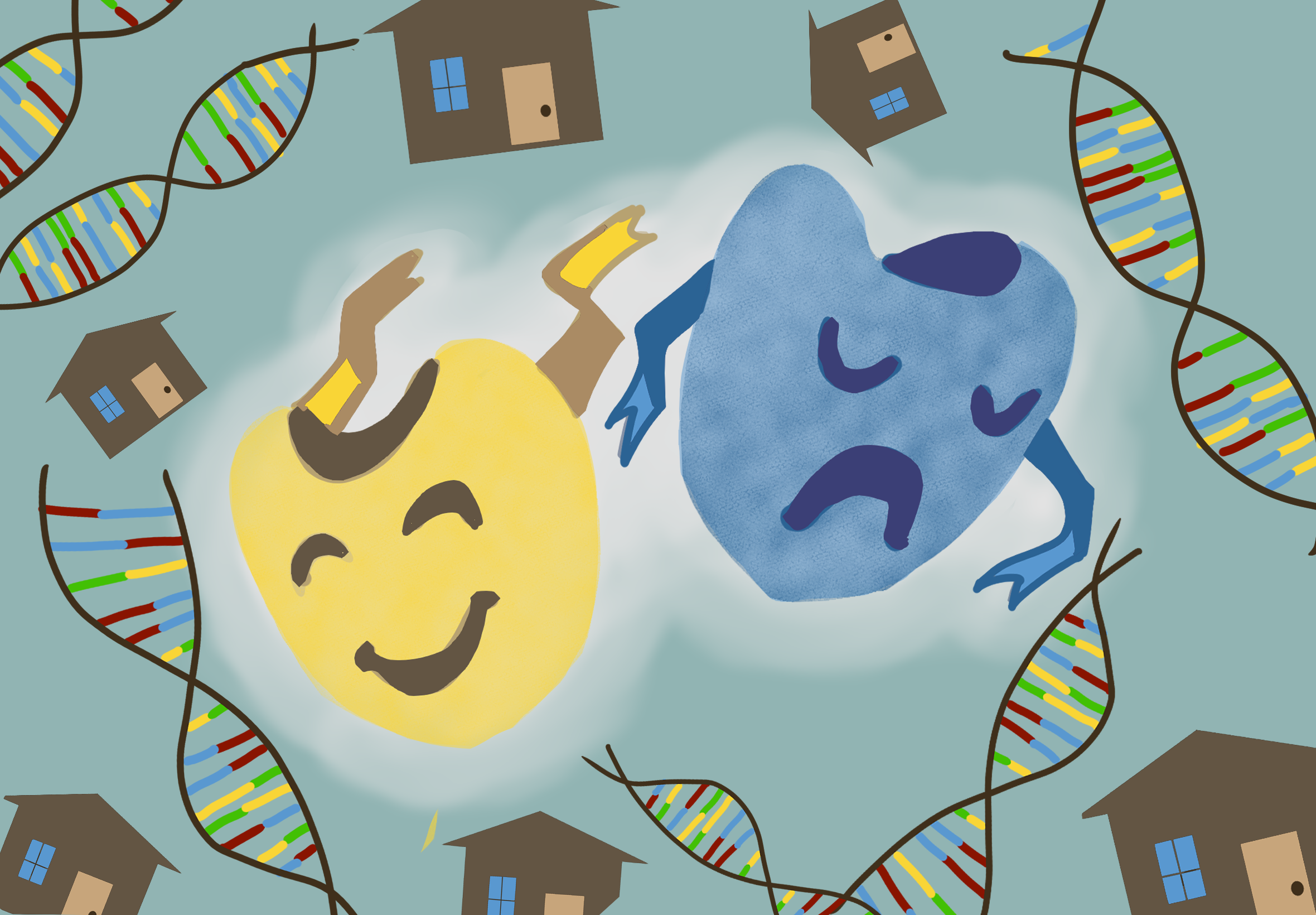
Graphic by Dora Meiwes
Can growing up in a strict household lead to a dependent and obedient personality? This is something many people have likely asked themselves at least once. To answer this question, we can consider the extent that upbringing has on long-term characteristics in general, such as personality.
To begin, we can consider the concept of nurture vs nature, which is a psychological concept comparing the interplay between an individual’s environment: nurture, and hereditary factors: nature, in influencing their development.
There is evidence that personality traits are influenced by heredity and environment in unequal proportions. A 2015 analysis of 50 years of data from 14 million teens around the world showed that approximately 49% of personality traits were contributed to genetics, with the remaining contributed to upbringing. An article from Nature estimates that human personality is 30-60% heritable according to twin studies.
Developmental psychologists believe that the nurture aspect of the environment influences the overall development of the person alongside their genetic characteristics. This relates to the concept of epigenetics, where the environment plays a role in turning certain genes “on” and “off,” thereby affecting your bodily processes. Childhood is a notable example of this. During childhood, there is significant mental development through neural plasticity or the reshaping of neural connections in response to changes in the environment.
A notable example of epigenetics can be seen in identical twins. Identical twins share the same DNA, but experiences in their lives can contribute to significant differences in personality and behavior. In the well-known “Minnesota Study of Twins Reared Apart,” the personalities and IQs of monozygotic, sharing 100% genetic material, and dizygotic, sharing 50% genetic material, twins raised apart were measured. This study found that genetics were responsible for 70% of the variation in IQ between the twins and that personalities were about as similar for monozygotic twins raised apart as that of twins raised together.
Yes, genetics play a role in influencing someone’s personality, but how does the environment also contribute? In a study by Diana Baumrind, she used comprehensive ratings for 139 adolescents and their parents to correlate drug abuse and competence levels through social ability and independence of adolescents with whether or not they used a certain authoritative parenting style, a parenting style characterized by warmth, nurturing, and clear demands and rules. Her study found that parents who used this authoritative parenting style protected their children from substance abuse and allowed them to develop competence more effectively. In this case, parenting serves as a “mold” to shape the behaviors of the children raised under it.
A study by Dr. Julia Freund, a then researcher at the Research Center for Regenerative Therapies, demonstrated interesting results to the question of how personality or behavior would be affected if identical twins were raised in the same environment. The study used 40 inbred or almost genetically identical mice in an identical environment. The researchers observed the extent to which they explored their environment and compared their neuroplasticity. They noted that as the mice aged, they would explore their enclosure at different rates and that they had different hippocampus connectivity. This was speculated to be due to small changes during the early development of the mice influencing their behavior through neural plasticity. This experiment highlights the significant role the environment plays in the development of certain characteristic traits, as the personal experiences and actions of an individual can contribute to behavioral development. A longitudinal study by Dr. Jasmin Wertz, a Post Doctoral Researcher at Duke University, on 2,232 British twins found that twins who received affectionate parenting during their childhood (5-10 years of age) were rated as open, conscientious, and agreeable young adults (age 18 years old). Therefore, parenting in adolescence does have an influence on the development and personality of an individual.
It is difficult to determine the exact extent to which personality traits are attributed to genetics and the environment, but it is known that these factors do contribute. This may mean that perhaps, if you grew up in a strict household, it could be conducive to an obedient and dependent personality. Parenting alongside life experiences, genetics, and neural plasticity can all play a role in shaping personality throughout your lifetime.
These articles are not intended to serve as medical advice. If you have specific medical concerns, please reach out to your provider.