
Written By: Haydn Gleason Edited By: Lara Sadi Infographic By: Daisy Fregoso
Fall brings beautiful leaves, cooler temperatures, and the beginning of flu season. On a college campus, it can feel like everyone catches a virus at this time of year. Thankfully, we all have a set of staple foods and drinks that we reach for when we feel a cold coming on, often passed down from family or popular media. In this article, I’ll dive into three of the most common sick foods: chicken soup, honey, and green tea, and explore the science behind these classic remedies.
CHICKEN SOUP
Chicken soup is one of the most quintessential foods to eat when you’re sick, and for good reason. Assistant Professor Colby Teeman of Dietetics and Nutrition at the University of Dayton writes that homemade chicken soup offers several nutritional benefits that can help ease the common cold and flu. The soup’s umami flavor can improve appetite and digestion, which inflammation often reduces. The warm, nutritious broth, made with ingredients like vegetables and chicken, also helps hydrate the body and break up mucus.
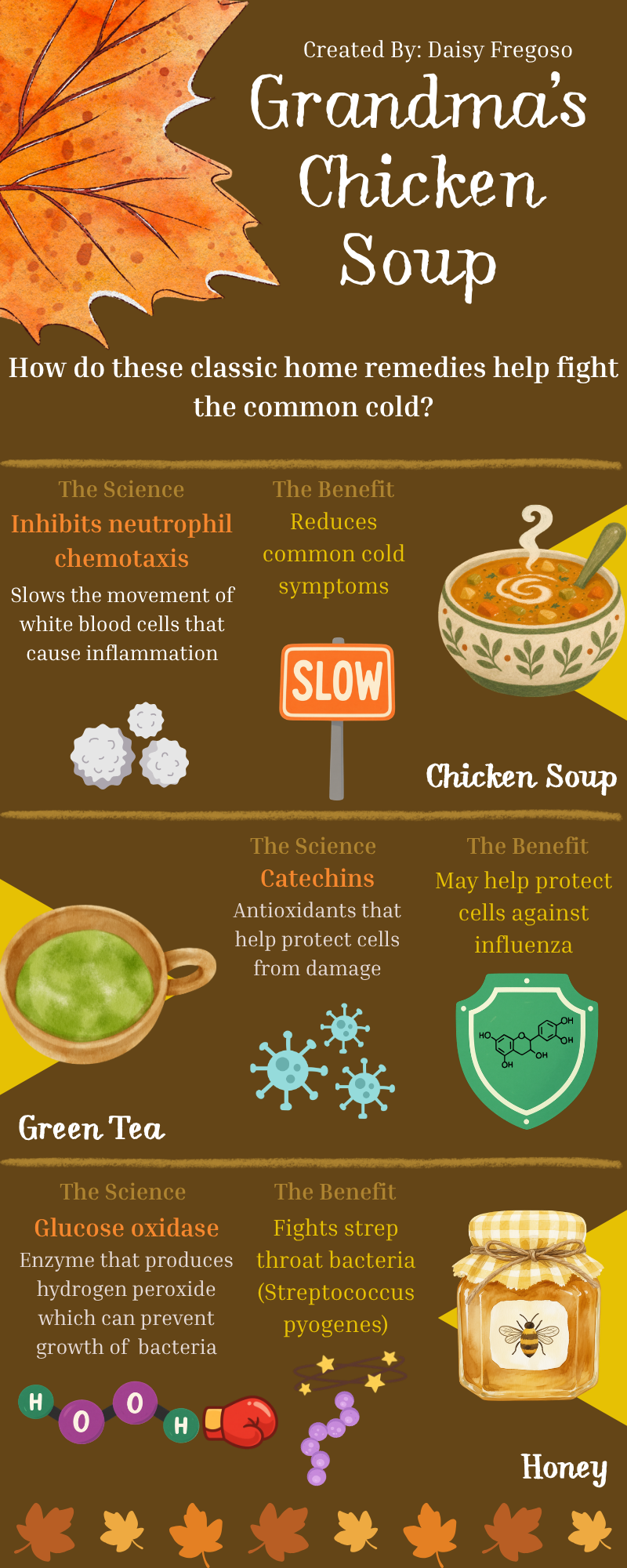
Chicken soup may even help calm inflammation, which causes symptoms like congestion and a cough. Research published by the American College of Chest Physicians found that an unknown component of chicken soup can stall a process called neutrophil chemotaxis. Neutrophils are a type of white blood cell that contribute to inflammatory responses, and neutrophil chemotaxis is how those cells move through the body. Simply put, this study observed that chicken soup could slow down some immune cells that cause common cold symptoms under their experimental conditions. The study’s results are fascinating, but it is important to note that this experiment used a lab device called a chemotaxis chamber, and does not necessarily mean eating chicken soup will have the same effect.
Therefore, chicken soup helps alleviate illness symptoms through its chemical contents, but it also offers an important, often overlooked, effect: comfort. Research published by the Association for Psychological Science found that the soothing effect of “comfort foods” arises from feeling less lonely; the researchers hypothesized that we associate comfort foods with loved ones after repeatedly sharing these foods together. Being sick can often be an isolating experience, especially in the wake of the COVID-19 pandemic and quarantine protocols. Chicken soup can therefore have a powerful impact in both the short term by offering comfort through connection, and the long term through its nutritional benefits.
GREEN TEA
For most of us, a hot cup of tea is another sickness essential; it soothes a sore throat and offers hydration. However, tea may have more measurable benefits. According to a scientific paper on tea's interactions with the flu and common cold, green tea leaves contain catechins, a type of antioxidant that may help protect our cells against viruses like influenza. A few studies in Japan have also shown that gargling green tea may help prevent the flu and common cold, but the reason remains unknown. That being said, more research is needed to solidify these potential antiviral benefits of green tea.
HONEY
Honey has been used for thousands of years to treat all manner of ailments, from hiccups to hepatitis. Some of the most common ancient applications are still used today and are supported by science; Egyptians used honey to help heal wounds, while the Greeks used it for a sore throat. According to a review of scientific literature on honey and disease, honey has antibacterial properties, including an acidic pH, dehydrating effects, and an enzyme called glucose oxidase, which creates the antibacterial compound hydrogen peroxide. Honey has also been proven to help heal wounds, fungal infections, and lesions caused by the herpes virus. Laboratory research suggests that honey can inhibit the growth of some bacteria, including Streptococcus pyogenes, which causes strep throat. Medical-grade honey has also shown promise in wound care, although ordinary honey should not be used to treat bacterial, fungal, or viral infections.