
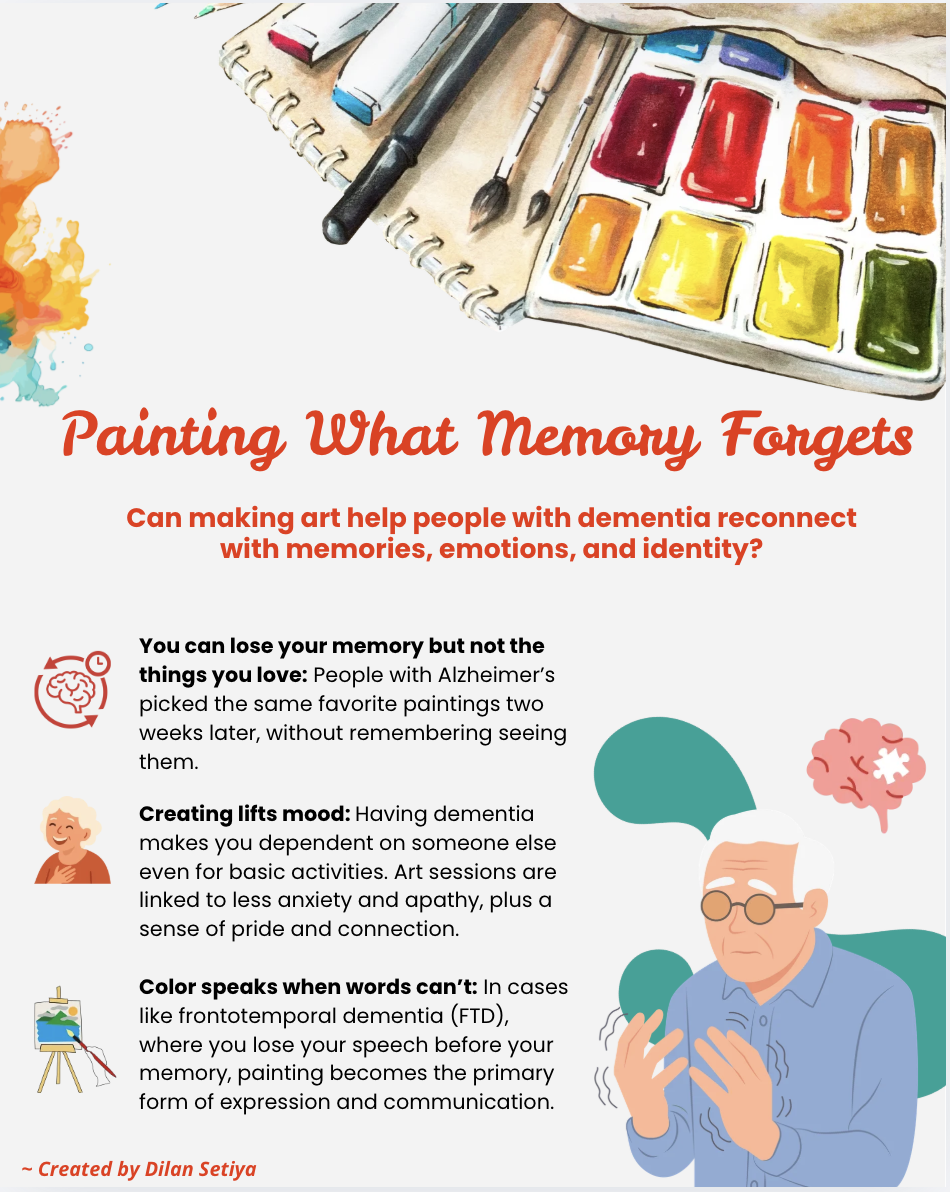
Can you reconnect with your memories, emotions, and sense of identity through art as a medium?
A person with dementia may forget a loved one's name but still remember the feeling of their favorite song, color, or painting. Case studies show that art therapy can become the primary mode of communication when a person struggles to form words. It also improves neuropsychiatric symptoms, social behavior, and self-esteem.
Our memory isn't one single thing. Dementia often erases recent events first, while feelings and personal tastes tend to stick around much longer. In one study, people with Alzheimer's disease sorted art postcards from favorite to least favorite, then sorted them again two weeks later. They didn't remember seeing the cards before, yet they picked nearly the same favorites, just as healthy adults did (Halpern et al., 2008). Looking at art then becomes a source of pleasure and also a way to improve attention.
Making art in a group often offers benefits that go beyond the finished piece. Finishing a painting can help people regain a sense of pride and control, especially when they can no longer walk, bathe, or cook on their own. Painting in a group also gives patients a chance to feel part of a community and to meet others who are going through the same situation. Art can also ease some of the hardest parts of dementia. Programs that pair viewing art with making it have been linked to brighter moods and lower anxiety and apathy (Schall et al., 2018). Because there is no wrong answer, people can express feelings they can no longer put into words, which may ease the frustration and restlessness that comes with being dependent on other people all the time (Chancellor et al., 2014). Creating side by side also gives caregivers a relaxed way to spend time with their loved ones and helps ease their burden, since the focus is on the art rather than the illness (Camic et al., 2014).
Art therapy becomes especially valuable as a form of expression and communication in cases of primary progressive aphasia, a type of frontotemporal dementia (FTD), in which people often lose their speech and personality long before anything happens to their memory. An example of this is a scientist who painted Ravel's Boléro by turning the music into color (Seeley et al., 2008). This unexpected burst of visual creativity has been shown to emerge in roughly 2.5% of FTD patients with the onset of their dementia. For someone struggling with this condition, painting can improve hand-brain coordination. Studies also suggest that it may increase activity in the areas of the motor cortex that control hand movements while lowering levels of stress hormones such as cortisol.
Art is not a cure for dementia. It cannot stop the disease or bring back lost memories. However, when you spend time painting with your loved ones or reach for the same shade of green you once loved, it triggers hidden memories and sparks shared moments of joy, which can help look beyond the disease and stay present in the moment.
These articles are not intended to serve as medical advice. If you have specific medical concerns, please reach out to your provider.
~Dilan Setiya