
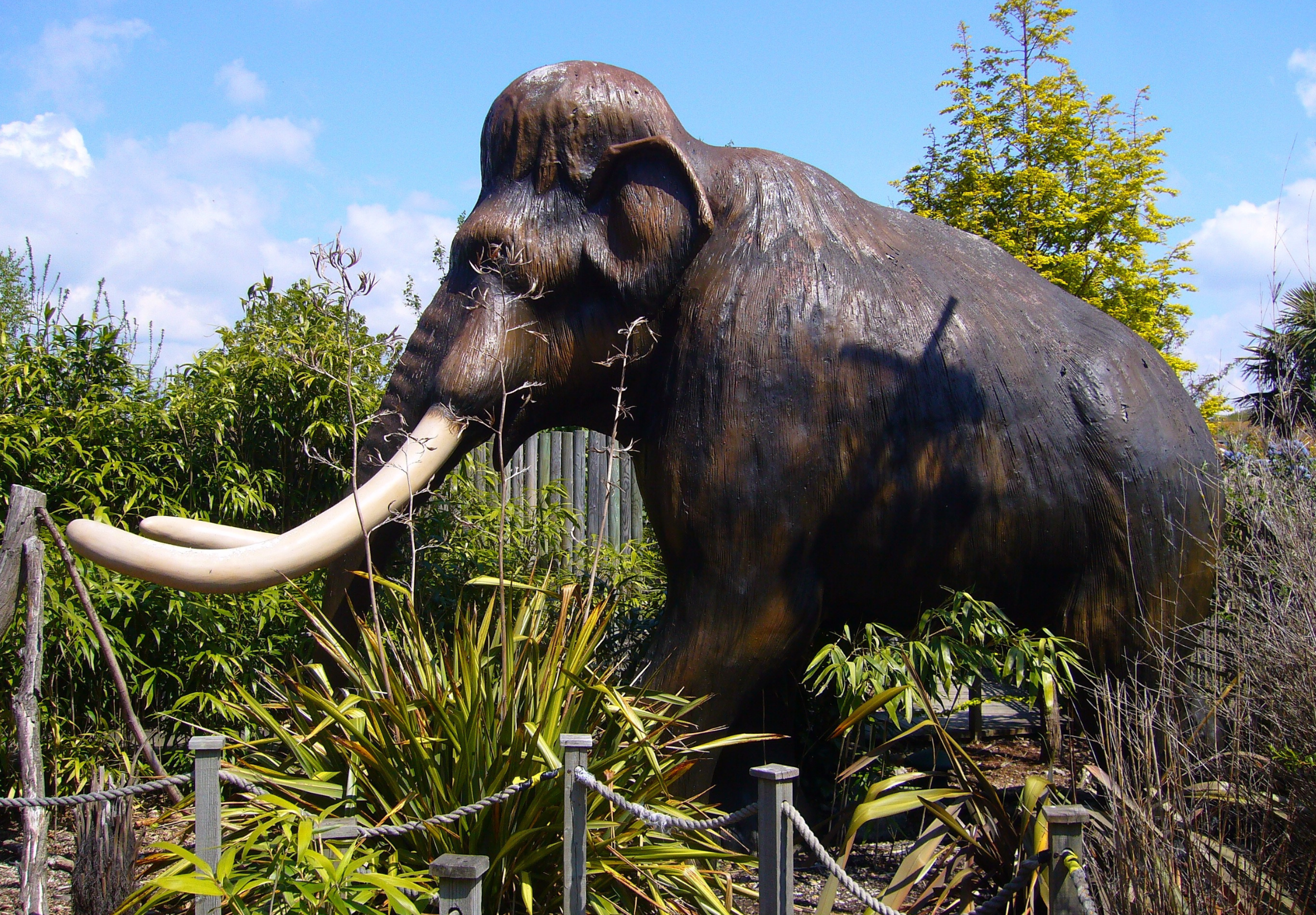
Yes, Woolly Mammoths may be coming back - but should they?
Exploring the ethics and divided opinions on de-extinction of species
Written by: Koushik Ganesan | Edited by: Monna Wei | Image by: Shirley810 on Pixabay
On October 1, 2024, the dire wolves returned to earth after being extinct for over 12,500 years. Colossal Biosciences, hailed as the ‘world’s only de-extinction company’, managed to accomplish something that had only been a topic of conversation among science-fiction enthusiasts until then. The company’s experts extracted dire wolf DNA from fossils, used the DNA of its closest living relative, the gray wolf, to identify where the genetic information differed and performed gene editing to make gray wolf genes express dire wolf traits. The pups were then birthed using a domestic hound as surrogate mother.
Sounds very Jurassic Park-esque, right? Yes! As soon as I read the news, the Spielberg-fan in me was jumping internally and a part of me was super hopeful to see an actual Jurassic Park sometime in the future. Then, I read that Colossal Biosciences were working towards the de-extinction of the Woolly Mammoth and had even created ‘Woolly Mouse’ as a step in that direction. This time, the imaginative part of me went into overdrive: I was literally daydreaming about going for a ride through exhibits of extinct animals like Woolly Mammoth, Sabre-toothed Tiger, Dodo and all the way down to T-Rex…complete with a John Williams score playing in the background.
Yet, the logical part of me, the part that painfully reminds me of reality (and assignments), was not easily convinced.
Even if it sounds exciting to bring all these extinct species back using genetic methods, can we really claim that these are the same animals as before, given that their DNA is considerably modified? Even if they are more or less the same, would they be comfortable living in current environmental conditions which are very different from the time they became extinct? If they end up competing with the current species, wouldn’t that be an unfair competition to both sides?
Thus, every scientific breakthrough of this magnitude always begs these questions: Is it really as great as it sounds? What consequences can we expect? And arguably, the most important question of them all: is this really the right thing to do, from an ethical standpoint?
And so I dug deep into the idea of de-extinction to understand what we stand to gain from it. According to Colossal Biosciences, the quest to bring back Woolly Mammoths would help in development and advancement of new technologies that can help save similar modern-day animals like elephants from extinction. Since mammoths lived in very cold climates, this research would also provide insights into the genetic basis for cold adaptation in animals. Additionally, the mammoth played a major role in preserving the health of the Arctic ecosystem which once efficiently absorbed carbon. Given that they’d be re-introduced to it, the company expects to see a revival of this ecosystem which could potentially help in reversing global warming. A Cambridge University Press article, apart from stating similar ideas of ecosystem revival, also mentioned that a common argument in support of de-extinction was the concept of “restorative justice”. As humans drove woolly mammoths towards extinction, we owe them compensation by resurrecting them.
On the other side of the table, the criticism for de-extinction is equally strong. Some scientists call these projects ‘irresponsible’ and argue that the conservation efforts need to be focused on living animals today and not on fossils. Another argument against de-extinction, as stated in the Cambridge University Press article above, is that it will cause unnecessary suffering, since cloning can possibly result in miscarriage, stillbirth, early death, genetic abnormality or chronic disease. Some also claim that we may overestimate our ability to predict and control such species and in turn, their ecosystems. As we only have limited information on these species and ecosystems based on fossil records, the argument is not without its value.
Thus, the idea of de-extinction has sparked an enormous debate in the scientific community, with a multitude of experts having a variety of subjective opinions and concerns. So, for now, we are stuck somewhere between the dream of having these ancient creatures roaming our lands and the skepticism of their practical impact. Maybe de-extinction will save ecosystems as it proclaims and we’ll get to go on vacations to the Arctic just to see these long-lost giants and post cool Instagram stories. Or maybe it’ll just give us one more reason to double-check if the electric fences are on and prove that Ian Malcolm was right all along.
Either way, as Colossal Biosciences march forward with their aspirations to de-extinct woolly mammoths and many more, all we can do is grab the metaphorical popcorn and watch the future unfold!
These articles are not intended to serve as medical advice. If you have specific medical concerns, please reach out to your provider.