
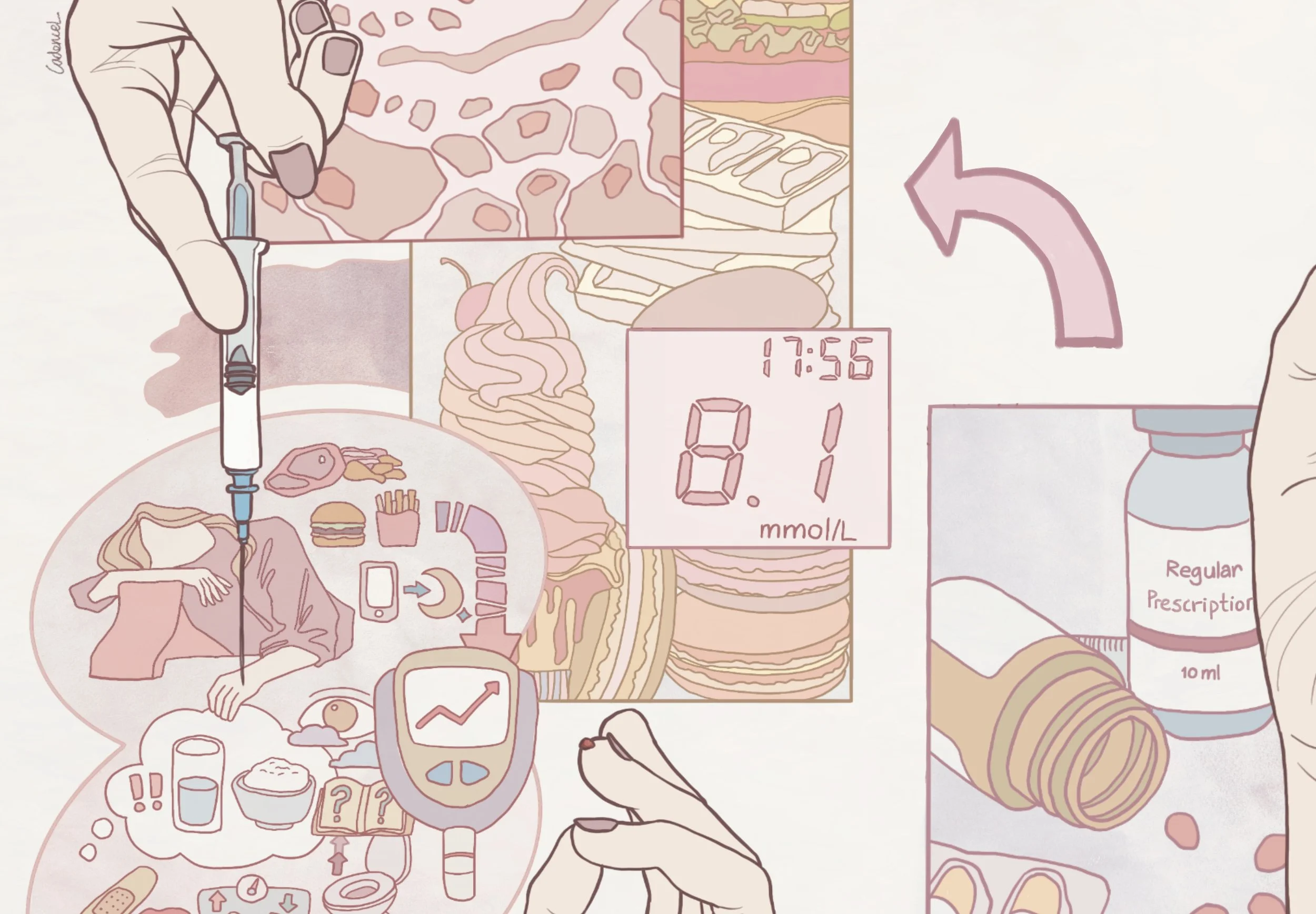
Edited by: Faith Martinez | Graphic by: Cadence Liang
We’ve all become reliant on common knowledge - if everyone likes eating at this restaurant, surely I’ll like it too. Or, if everyone says this professor is difficult I’d better steer clear. This could be why when, at the doctor’s office, we feel the utmost confidence when we’re handed the standardized prescription. If it worked for everyone else, why wouldn’t it work for me? I hope to illuminate for you today, dear reader, why your physician mentioning “if nothing happens in three weeks, come back to see me” is not simply a nice professional formality. As college students, it’s important to realize that standardized drug treatments for common diseases cannot affect everyone the same way. Consider some important concerns that many college students face - acne, wisdom tooth pain, and depression.
Codeine is a mild opioid drug used for pain treatment and has also historically been used to treat students and young adults when they get their wisdom teeth removed. However, genetic variations have shown to lead to severe consequences for some patients. For individuals with a more active enzyme, their quicker conversion of codeine into morphine in the liver can build up to toxic levels even after an appropriate codeine dose, which increases health risks.
Acne is so common that nearly all adolescents will experience it to some degree. One known treatment for acne is isotretinoin. However, isotretinoin is known to have varying degrees of success and side effects for various individuals who use it to manage their acne. Scientists have traced these different responses to varying plasma concentrations of metabolites, which means differing metabolism and the small resulting molecules have an effect on how this known acne treatment will work for different individuals.
Then, consider antidepressant medication. In an era of mental health crisis, it’s incredibly important to recognize that these medications, the first-line treatment for depressive episodes, are not received equally by patients who need help. According to a Psychiatry Online study, about 50% of patients respond to first-line antidepressant drugs, and even then, only 30% achieved full symptom remission.
For situations like these, it’s clear why it’s important to understand that responses to drugs are personal and unique. Individual responses based on genetic diversity are the difference between treatment and continuing to suffer from symptoms. According to a PubMed study, participants who had more filled prescriptions and people who had a treatment change were actually more likely to have worse long-term outcomes. This might seem counterintuitive - more treatment and edited treatment leading to worse outcomes. However, this can be considered as evidence of the harm of an impersonal, guess-and-check strategy for drug plans. These people had more prescriptions filled and changes in treatment because earlier methods weren’t working. In the long term, this could’ve resulted in them paying more for ineffective treatment and having their treatment delayed, possibly worsening their symptoms in that time. For something as serious as mental health and depression, there is simply no time to think of “one-size-fits-all” for first-line drug treatment.
So, where can we start to build a solution? There is a growing field of study about the influence of genetic difference in the response to medications: pharmacogenetics. For cases such as codeine and acne treatment, these are response variations based on known metabolism and enzyme genetic sources. With pharmacogenetics, its hope is to measure the level of enzymes that metabolize medications to know whether a therapy will be effective, or dangerous, before a patient even starts on a drug plan. The goal is for individuals to stop believing and accepting that medicine is “one-size-fits-all” - because it doesn’t - and start building solutions. For example, looking at a genetic makeup, doctors could decipher whether someone has a slow metabolism for a medicine, which could accumulate and cause toxicity, or whether someone’s fast metabolism for that medicine means the usual dose will never be effective. Faster effective treatment, while simultaneously protecting the patient from adverse side-effects.
Many diseases can progress and worsen over months to years, but it can only take days to moments for something catastrophic to occur or serious physical damage to be a result of ineffective treatment. Whether we consider heart or other organ diseases, or depression, risk of harm and irreversible damage is raised the longer treatment is ineffective or detrimental. So, developing and implementing personalized medicine could do incredible things - reducing financial and time expenses, and increasing quality and length of life for patients. For personalized medicine to progress, current research on earlier disease detection and research on biomarkers and complex genome understanding are important developments. Pharmaceutical companies will need to invest in developing new diagnostic techniques in order to better match people with their right drug, dose, and timing, eliminating the “one-size-fits-all” drug plan in favor of personalized care.