
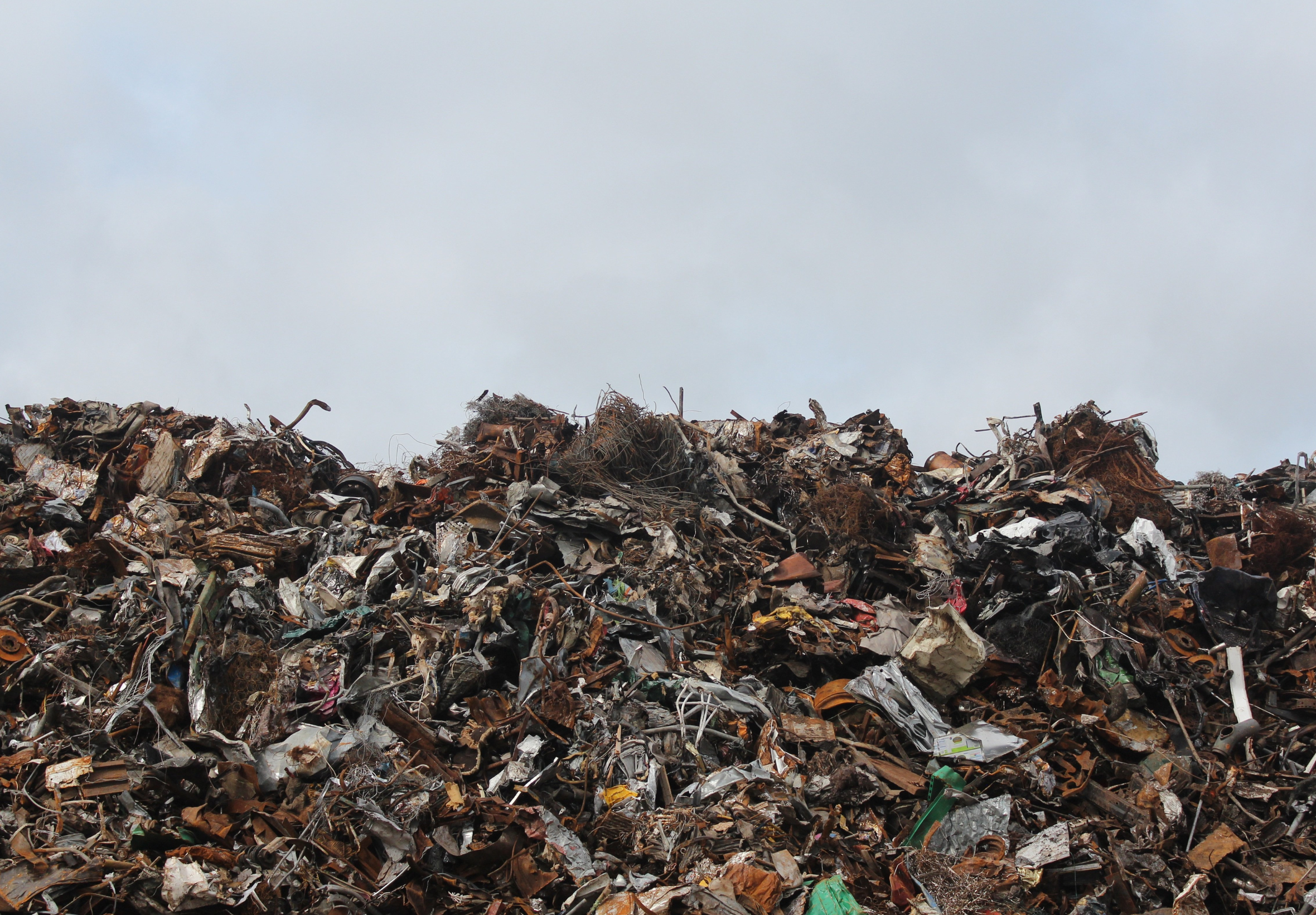
The Trash Patch the Size of Texas - and the Algorithms Fighting It
How machine learning is helping scientists identify plastic and combat pollution in the Great Pacific Garbage Patch.
Written by: Sanjna Sunil | Edited by: Somya Mehta | Image by: Pexels on Pixabay
Intro
261,258 square miles. That’s roughly the size of Texas - home to over 30 million people, 600,000 businesses, and 5,000 native species. Now imagine an area twice as large, floating in the middle of the Pacific Ocean, populated by plastic debris, nets, and over 500 unique species struggling to barely survive.
This is the Great Pacific Garbage Patch.
What is the Great Pacific Garbage Patch?
Spanning over 600 thousand square miles within the Pacific Ocean, the Great Pacific Garbage Patch (or GPGP) is a massive accumulation of minute plastic debris trapped in spiral ocean currents called “gyres”, which behave similarly to how a tornado siphons. Most envision the GPGP as a solid island of trash, but it actually is like a soup of varying sizes of plastic.
Patch composition comprises four separate types of plastic sizes:
Microplastics: 0.05-0.5cm
Mesoplastics: 0.5-5cm
Macroplastics: 5-50cm
Megaplastics: greater than 50cm
Collectively, micro, meso, and macro plastics make up 92% of the GPGP. Bottle caps, bottles, small plastic cuts, fishing nets, masks, and even polyester clothes remain top culprits in substance. While smaller pieces of plastic take 20-500 years to decompose, larger pieces can take 50-500 years. As such, as constant plastic pours in, natural degradation remains futile.
But Why Hasn’t Anyone Cleaned It?
Initiatives such as The Ocean Institute and the Ocean Voyages Institute invest time, money, and copious human effort to clean the patch, but ultimately lead to the same bottleneck: different kinds of plastics require different cleaning handling.
For instance, envision a salad: a mixture of small black lentils, dark brown grains, pinto beans, and darkened spinach with large croutons. If asked to separate each item into piles, one could only imagine how long that would take.
Clean-up crews face the exact dilemma: separating macro, micro, mega, and meso plastics. Splitting large nets overflowing with masks, clothes, and tiny pieces of plastic takes massive effort, and spreading that endeavor beyond 600 square miles is painstakingly slow.
How Are Scientists Using ML Algorithms?
To tackle the caveat, organizations like The Ocean Cleanup partnered with research scientists, AWS engineers, and developers to expedite the ocean cleanup process.
Recall the salad analogy: different plastics, different sizes, all different ways to separate. Machine learning algorithms automate what humans cannot realistically do: distinguish plastic from natural debris and classify micro, meso, macro, and mega plastic at a scale.
The process begins with data collection. Drones and satellites photograph thousands of 4K pictures across patches to understand the composition. Scientists at Plymouth Marine Laboratory in the United Kingdom discovered that utilizing light signals on wavelengths clearly identifies plastics: for example, clear water absorbs near and shortwave infrared wavelengths, whereas plastics reflect wave signals.
Once all the data and images are gathered, the data flows into an AWS database, which scales upward as extensive information pipelines. Machine learning algorithms are then connected to the database to grab the information and learn to distinguish “plastic behavior” versus “marine behavior”.
As powerful as it seems, an ML algorithm is as useful as its accuracy. To validate their model, scientists tested it against coastal waters in Ghana, Canada, and Scotland.
Their result?
An average accuracy rate of 86%, and specifically in Canada, a 100% accuracy, especially in detecting microplastics. The results illustrate that ML performs consistently across different environments, making it a powerful tool for large-scale ocean monitoring.
As the age of GPUs, supercomputing, and tech grows, the ability and responsibility to protect the planet only grow stronger. As the patch continues to grow, destruction of marine life and ecosystem health expands as well. For instance, ghost nets, where old fishing nets were left astray, catch fish and hold them there. As such, with a patch of garbage twice the size of Texas, it takes both the brightest minds and strongest hearts to confront it
These articles are not intended to serve as medical advice. If you have specific medical concerns, please reach out to your provider.