
The Philosopher who inspired Einstein, Heisenberg and Freud
Ernst Mach, the namesake of the speed of sound, and his influential ideas.
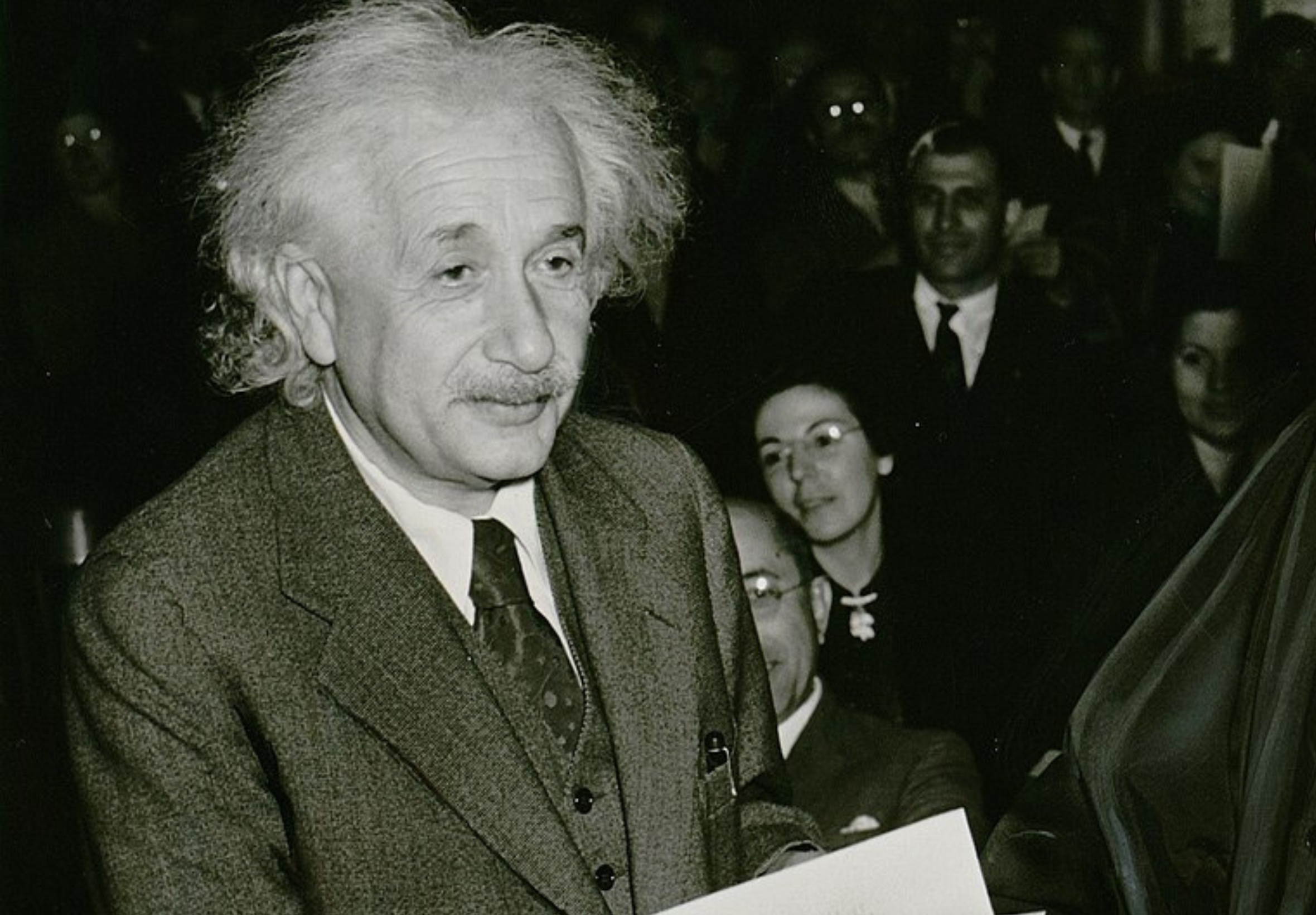
Image by Creative Commons Zero on Wikimedia Commons
The field of philosophy is rarely acknowledged in modern scientific discoveries. Gone are the days when physics was merely natural philosophy, when, in fact, all science was a sub-branch. But it was only a little over a century ago that philosophy was still very much intertwined with the sciences, and that is the subject of analysis today. The namesake of the speed of sound, Ernst Mach, was the first accepted philosopher of science whose philosophical writings arguably hold more influence than his scientific discoveries. He influenced multiple divisions of physics, psychology, and biology. Today, we will focus on how his ideas shaped Einstein’s idea of relativity.
To fully understand each of these ideas, we must, as always with physics, begin with Isaac Newton. The world, as most of us understand it, is a world of what is called “absolute space” and “absolute time.” Now, for the sake of this article, I must first request that you grant that there is such a thing as “space” and “time.” Simply put, Newton’s idea of “absolute space” is a mathematical representation; imagine every object’s motion as appearing on a fixed grid, like a line on a graph. “Absolute time” refers to the idea that time flows at the same rate everywhere; when we watch the train arrive at the station, it has arrived at the same “time” whether you are at the front of the station or the back.
This seems quite obvious and intuitive to us today, but this is the discovery that defined all of mathematics, physics, and engineering from 1687 (when Newton wrote his Principia) up until the early 1900s. It is this that lays the groundwork for his mathematical theories of motion and gravity, allowing us to predict the motion of the planets and achieve all other feats of industrialization.
The Measurement Problem
Ernst Mach, however, had a problem with this framework. A fundamental problem that had to do with how we measure things. The “measurement problem” is an ongoing problem that affects the foundation of today’s quantum mechanics and is at the basis of all science. Ask yourself: what does it mean to take a measurement? Take a ruler when you measure a line. What is measured as one inch is only the distance from the “zero” notch to the “one” notch. Measurement is a comparison. It is a comparison of two things relative to each other, our own sensations and perceptions of things, not a comparison of two different points in absolute space. Therefore, all measurements are relative; therefore, all science is relative.
Einstein and Relativity
Which brings us to Einstein. You’ve heard many things about him: he failed school, he was an unparalleled genius, and he invented modern physics. These are all half-true. Einstein was a poor student in his university classes; he refused to attend the lectures of professors he didn’t respect and had his girlfriend provide him with all the notes. He certainly wasn’t a great student, but he definitely didn’t fail. And while he’s credited with either finding or inspiring many of the great modern discoveries, he was famously one of quantum mechanics’ greatest critics.
When he graduated from university, he could not find a letter of recommendation anywhere (owing to his poor studies) and found himself working as a clerk in the patent office. But he found solace in going drinking with his buddies and discussing philosophy, particularly the philosophy of Ernst Mach. Mach’s philosophy dictated that proper science calls for the analysis of objects of direct experience or observation. And in Einstein’s famous paper in 1905, where he outlines his theory of special relativity, we see just that.
It was Einstein’s combination of mathematical genius and desire to prove Mach correct that led him to his discovery and postulate of what is now called “special relativity.” We know this discovery now by the concepts of length contraction and time dilation. The idea is that the closer an object is moving to the speed of light, the more dilated its experience of time becomes, and the shorter distances become to it. In other, more sci-fi related terms, the closer you move to the speed of light, the slower time passes for you compared to somebody at rest. There’s a bunch of technicalities here with what counts as rest, but the important discovery is that there is one thing in the universe that is not relative: the speed of light, at 300,000,000 meters per second.
This means that no matter where you are in the universe, whether you are in motion by Earth’s rotation, or the trajectory of the solar system along the edges of the Milky Way, or in a rocket, the speed of light will always be the same. Compare this to cars on the highway; if you drive in the same direction, it will appear as if the cars around are not moving or moving much more slowly than if you were still. For cars on the other side of the highway, they appear to be moving faster. This may be the case for such large and massive objects (compared to light), but for light, it does not matter where you are or how fast you’re moving. In other words, we’ve found that thing which could properly follow Mach’s ideas.
The consistency of the speed of light is one thing through which we could figure out all else from science, without using any Newtonian (and thus slightly inaccurate) assumptions. Einstein found this one thing through his love of Machian philosophy.
These articles are not intended to serve as medical advice. If you have specific medical concerns, please reach out to your provider.